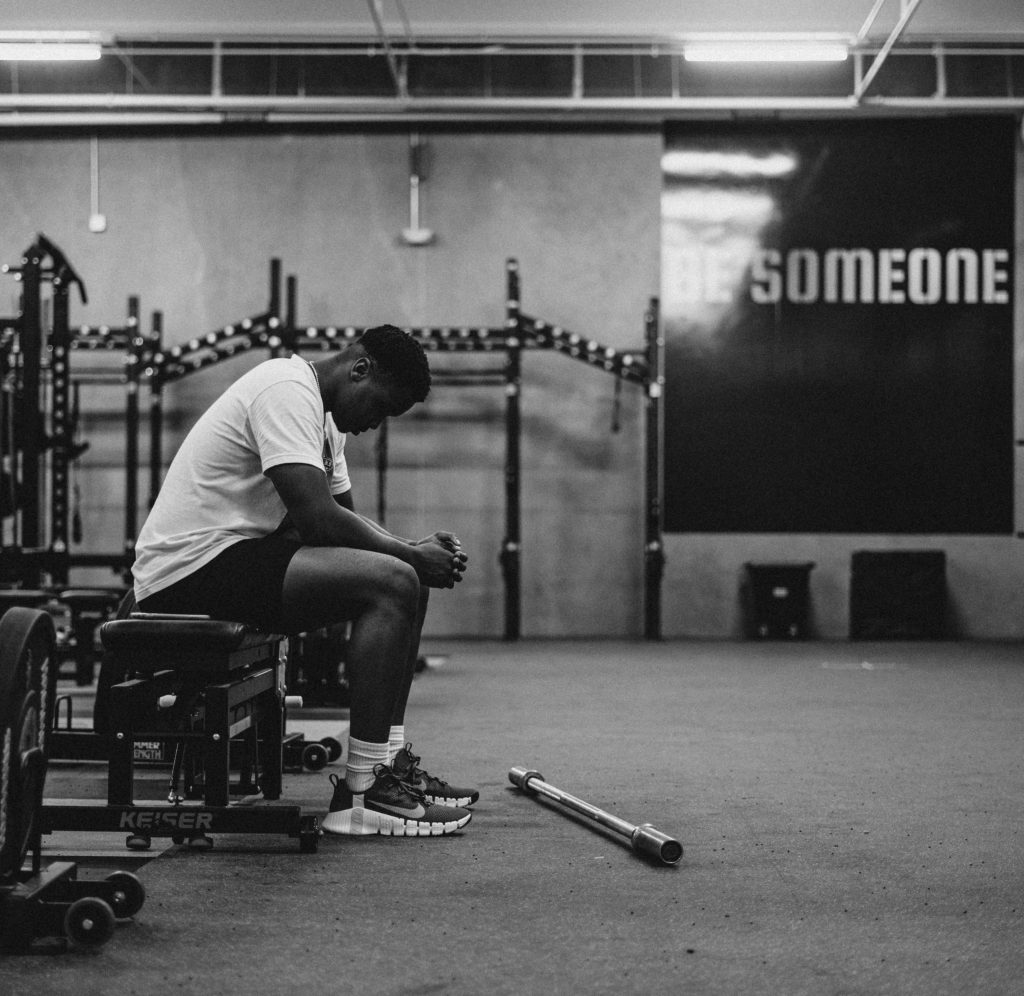
It’s already the aftermath. It’s always been already here. Everything is processed publicly, nothing was discussed privately. Truth is, we didn’t find the words for it before. And we still haven’t found them. What we have is the pretense of caring when it’s relevant enough in the media to participate in the discussions, to feel like we’re doing something. But when all of this has run its course, what’s left of it? More questions, less solutions. The retrospective builds up suddenly overnight when reality strikes hard enough to force a moment of awareness. But not one of us knows how to prevent it in time. Not one of us asks questions before, and now we are left with what is remaining of our silence: the infinite aftermath loop. And in professional sports, the silence doesn’t forgive.
The passing of the 25-year old NFL wide receiver Rondale Moore this past February marked another tragic event in the world of professional sports. A promising young athlete gone too soon, sidelined by injuries, unable to translate his emotional pain. It is yet another brutal reflection of the mentality going around the professional leagues. It’s a world where feeling too much is seen as weakness, and where discussing mental struggles is not encouraged. That same month, Olympic figure skater Ilia Malinin had to publicly collapse mid-performance at the 2026 Milano Cortina Olympics to spark yet another round of discussion. Olympic medalist gymnast Simone Biles had to bring her support to her fellow athlete to remind the public that these things happen. More often than we can think of it.
Different names, different sports. The story repeats itself under different disguises, but which one will it take for someone to finally listen? Have we forgotten that our athletes are first and foremost humans before high-performance machines? And humans should be able to communicate their feelings to maximize their performance. The human makes the performance, not the opposite. And yet, sports are expected to be entertaining, to give fans an occasion to reunite and celebrate the performance of others we often see as inspiring role models. The same entertainment builds pressure, and that pressure quickly contaminates the athlete’s surroundings. Coaches, teams, and leagues dip themselves into that euphoric feeling of performing and winning, but ultimately end up drowning the athletes themselves.
And that’s where the system fails. By expecting outstanding output each and every time, we forget the input our beloved athletes need. In a way, we become witnesses of a slow deterioration, most often invisible to our naked eyes, caused by our own need for entertainment and high expectations. And then a tragedy happens, and everyone is shocked. The leagues react, media coverage is higher than ever, fans and fellow athletes carry the emotional burden of the news. We deal with incidents, never the structure. And the aftermath loop goes on and on.
The mind of an athlete is an extraordinary thing. Yet we give it ordinary conditions to perform in. We give full responsibility to the athletes themselves. Simone Biles had to advocate herself for her mental health crisis during the 2020 Tokyo Olympics, and yet again when she publicly supported Ilia Malinin following his 2026 Milano Cortina Olympics downfall. Athletes doing the system’s job. There’s something fundamentally wrong with that. The hypocrisy of expecting outstanding performance from a human being having to be its own therapist during high-demanding moments. Having to support fellow athletes when the structure fails to do so. Having to deal with everything from excellence to sanity. And it’s not about blaming the athletes for it. The struggle isn’t mental health issues. The struggle is the lack of support for mental health across the system. The same system that causes these issues has no answer for them. It’s a problem without a solution.
A mourning statement means nothing after the news cycle has tired itself out. Public awareness campaigns do little contribution if there’s nothing being done by the decision-makers behind the scenes. We treat athlete mental health as content marketing rather than a real issue in desperate need of a solution. When a new story pops up, the leagues expose it in the form of a refined statement, the public is outraged for a while, and then as time slowly goes on, the silence consumes the deeper, true story of it all. Until the next one. And the next one. It becomes a story impossible to make sense of, because the sense itself is never addressed.
We keep recycling the same story without ever addressing the problem of it. If no one looks at athlete interiority, how can we be surprised when a disaster happens? How can we even claim to care about performance when we don’t take care of the engine driving it? It’s a car crash waiting to happen, over and over again. And the aftermath will go on and on, until we sit down, talk, and look at how to prevent the car from crashing in the first place.


Leave a Reply